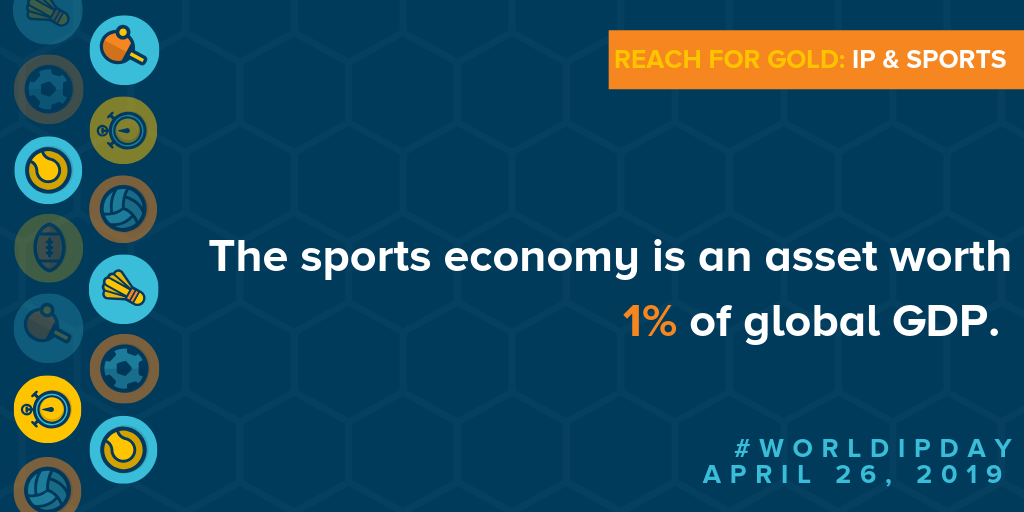
Each year, April 26 marks the celebration of World IP Day, when the importance of intellectual property rights and the achievements gained from its protection are recognized. According to the Global Innovation Policy Center (GIPC) intellectual property (IP) contributes $6.6 trillion to America’s GDP. In 2019, the World IP Day celebration focuses on sports and […]
Chinese Data on Trade Shows Imports From America Have Fallen in 2019
About a year ago, President Donald Trump’s administration imposed heavy tariffs on foreign manufactured aluminum and steel. This triggered a domino effect of retaliatory tariffs with China. The administration’s protectionist moves have scared American businesses and investors. In all, the U.S. has put tariffs on $250 billion of Chinese goods. The administration has justified these […]
NAFTA Negotiators Should Promote Strong IP Rights
As the May 18 deadline for negotiating a modernized North American Free Trade Agreement (NAFTA) looms, negotiators should consider closely how intellectual property (IP) rights will be treated between the countries involved. According to the Global Innovation Policy Center’s (GIPC) 2018 International IP Index, which measures 50 countries against 40 IP indicators, the U.S. ranked […]
Recognizing the Value of Women’s Intellectual Property Rights on World IP Day
The creative influence of women around the globe is of critical importance to innovation.
Microsoft/Ireland Case Poses Opportunity for Congress
Republicans and Democrats in Congress have a hard time agreeing on anything. But, they might concur that it is not appropriate for law enforcement officials to order a cloud services provider to turn over customer data stored in another country without that country’s permission. In December 2013, a federal district court judge in New York […]
Bill Addresses International Challenges to Online Privacy
American businesses have taken the lead in cloud computing technologies, enabling citizens around the world to communicate with each other, store photos, videos, and documents with greater security and at lower costs. However, as this technology continues to evolve, challenges in protecting individual privacy become more evident, including data of U.S. citizens that is stored […]
The Cuba Embargo: A Personal Observation
In June, 2017, representatives from a handful of right-leaning organizations, including Citizens Against Government Waste (CAGW), participated in a “people-to-people” delegation to Cuba. The “educational outreach” trip was arranged by Engage Cuba, “the leading coalition of private companies and organizations working to end the travel and trade embargo on Cuba,” in conjunction with Cuba Educational Travel (CET). Based in Naragansett, Rhode Island, CET is the tour facilitator that has been awarded the necessary licenses from the U.S. Treasury Department’s Office of Foreign Assets Control “to organize trips to Cuba in full compliance with rules and regulations governing travel to Cuba by individuals under U.S. jurisdiction.”
Au Revoir, Paris Accord
On June 1, 2017 President Donald Trump withdrew from the Paris Climate Treaty, often called the Paris Agreement or Accord. Based on the caterwauling and wringing of hands by environmentalists, the media, state and local officials, and foreign leaders, you would have thought that floods would be ensuing within days due to the polar ice caps melting overnight and the end of the world was nigh.
We Won’t Always Have Paris
Yesterday, President Donald Trump withdrew from the Paris Climate Treaty or, as it is often called, the Paris Accord. He righted what has been a bone of contention since the agreement’s birth at the Paris climate change meeting in November 2015. Many senators and policy analysts have rightfully argued the climate agreement was a treaty and should have been submitted to the Senate for advice and consent, as the Constitution requires. But, President Obama did not want to submit it to the Senate because he knew it would not be ratified. Instead, he continued his executive overreach and implemented the policy illegally with his “pen and his phone.” Chris Horner and Marlo Lewis of the Competitive Enterprise Institute discuss in their May 2017 report the serious legal and economic consequences to the U.S. if President Obama’s actions were not reversed.
Trade Negotiations Should Review Findings of Special 301 Report
During President Trump’s campaign and throughout his first 100 days in office, there was a great deal of discussion about tearing up or renegotiating various trade agreements, especially the North American Free Trade Agreement (NAFTA) among the U.S., Canada, and Mexico. President Trump announced on April 27, 2017 that instead of withdrawing from NAFTA, as he often suggested during the campaign, he would instead renegotiate the agreement. While the President may be focused on what he views as unfair trade practices and their impact on jobs, he must not forget about intellectual property (IP) rights.