

Yesterday, with little notice, a big decision was made by the Supreme Court of the United States. Their ruling means biosimilars, or “generic” versions of biologic drugs, will be able to be marketed immediately after approval by the Food and Drug Administration (FDA), just as Congress intended. The decision will save consumers and taxpayers billions of dollars.
We Won’t Always Have Paris
Yesterday, President Donald Trump withdrew from the Paris Climate Treaty or, as it is often called, the Paris Accord. He righted what has been a bone of contention since the agreement’s birth at the Paris climate change meeting in November 2015. Many senators and policy analysts have rightfully argued the climate agreement was a treaty and should have been submitted to the Senate for advice and consent, as the Constitution requires. But, President Obama did not want to submit it to the Senate because he knew it would not be ratified. Instead, he continued his executive overreach and implemented the policy illegally with his “pen and his phone.” Chris Horner and Marlo Lewis of the Competitive Enterprise Institute discuss in their May 2017 report the serious legal and economic consequences to the U.S. if President Obama’s actions were not reversed.
That CBO Score for the American Health Care Act
All of Washington finally got what it had been waiting for since the beginning of May: The Congressional Budget Office (CBO) score for H.R. 1628, the American Health Care Act (AHCA), which passed the House of Representatives on May 4, 2017, by a vote of 217 to 213. As you will recall, ACHA is designed to repeal and replace Obamacare. Now the bill will be sent to the Senate for consideration.
House Passes the American Health Care Act, Senate Up Next
On May 4, 2017, the House of Representatives passed H.R. 1628, the American Health Care Act (AHCA) by a vote of 217 to 213. Only Republicans voted for the legislation; 20 Republicans and 193 Democrats voted no. The final bill was a modified version of the legislation that the Republican leadership pulled from consideration in late March. The Congressional Budget Office is expected to provide a score by the end of May. From there, the bill is scheduled to move to the Senate for consideration, although that body appears to be prepared to write its own legislation.
The Louisiana House Should Reject Pharmaceutical Price Controls
The Council for Citizens Against Government Waste (CCAGW) has been tracking numerous bills in states throughout the country that are masquerading as a way to lower drug costs by implementing pharmaceutical cost transparency. Supporters claim the legislation will help everyone understand how prescription drugs are priced by collecting information about manufacturing costs and pricing data that would be studied and analyzed by the government.
Pennsylvania Attempts Faulty Price Control Scheme for Prescription Drugs
In their July 2, 2015 Federal Trade Commission (FTC) commentary, “Price Transparency or TMI,” Office of Policy Planning authors Tara Isa Koslov and Elizabeth Jex noted, “Is more information about prices always a good thing for consumers and competition? Too much transparency can harm competition in any market, including in health care markets.”
The House Passes H.R. 1628, a Bill to Repeal and Replace Obamacare
On Thursday, the House of Representatives passed H.R. 1628, the American Health Care Act (AHCA) of 2017. Only Republicans voted for the measure and every Democrat voted against it, along with 20 Republicans. The vote was 217 to 213.
A Dopey Policy
Currently, 26 states and the District of Columbia allow either medical and/or recreational marijuana. The January 23, 2017 edition of Westword reported that 11 additional states are considering legalizing recreational marijuana this year.
Pharmaceutical Transparency Legislation – Sounds Good but Foolhardy
Legislation to create “transparency” in drug costs has been introduced in dozens of state legislatures across the country, purportedly to understand how prescription drugs are priced. While details vary from state to state, all the bills would require pharmaceutical manufacturers to provide reams of pricing and cost data, much of it proprietary, to state officials. […]
Big Pharma DOES Negotiate Drug Prices
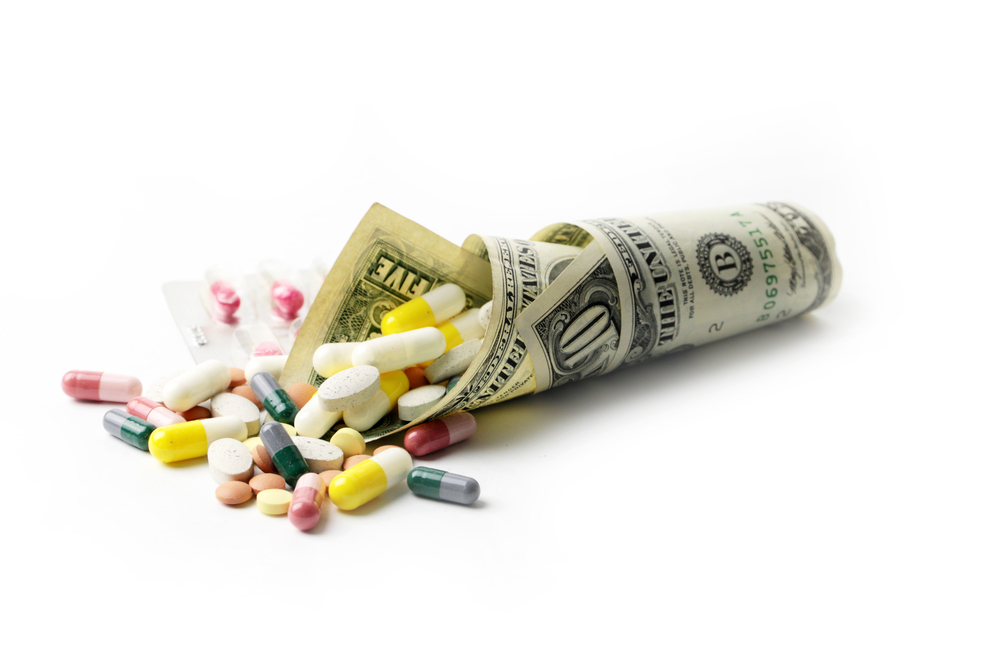
On March 7, 2017, President Trump tweeted he was “working on a new system where there will be competition in the Drug Industry. Pricing for the American people will come way down.” The next day, in a meeting with Representatives Elijah Cummings (D-Md.) and Peter Welch (D-Vt.) , the president reiterated that he wanted to […]